









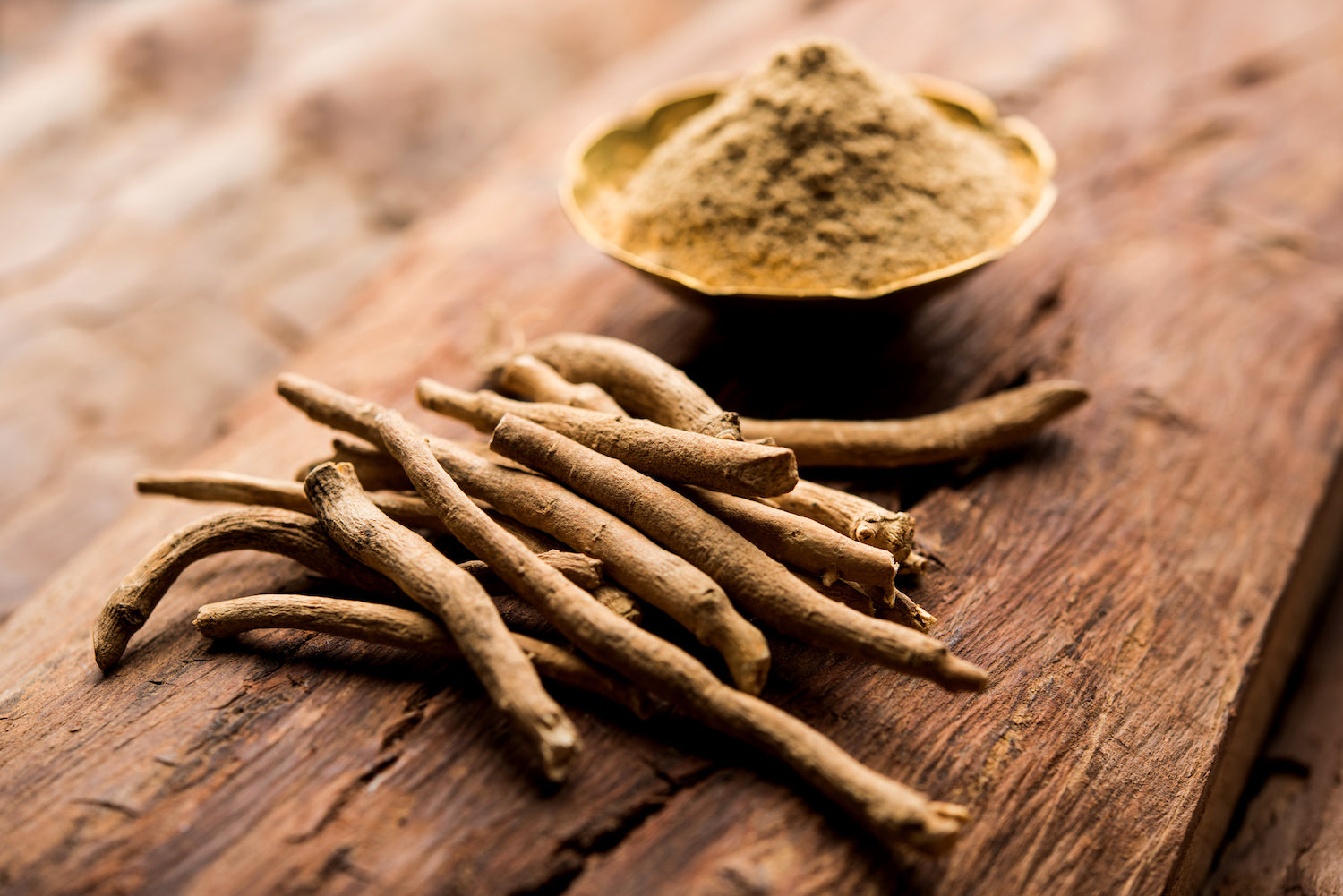
How Ashwagandha Supports Testosterone Levels
Ashwagandha, a herb used in Ayurvedic medicine, may help improve testosterone levels by reducing stress and supporting hormonal balance. Studies show it can lower cortisol, a hormone linked to stress, which often suppresses testosterone production. Additionally, ashwagandha improves sperm quality, fertility, and physical performance, making it a popular choice for men looking to enhance overall health and fitness.
Key Points:
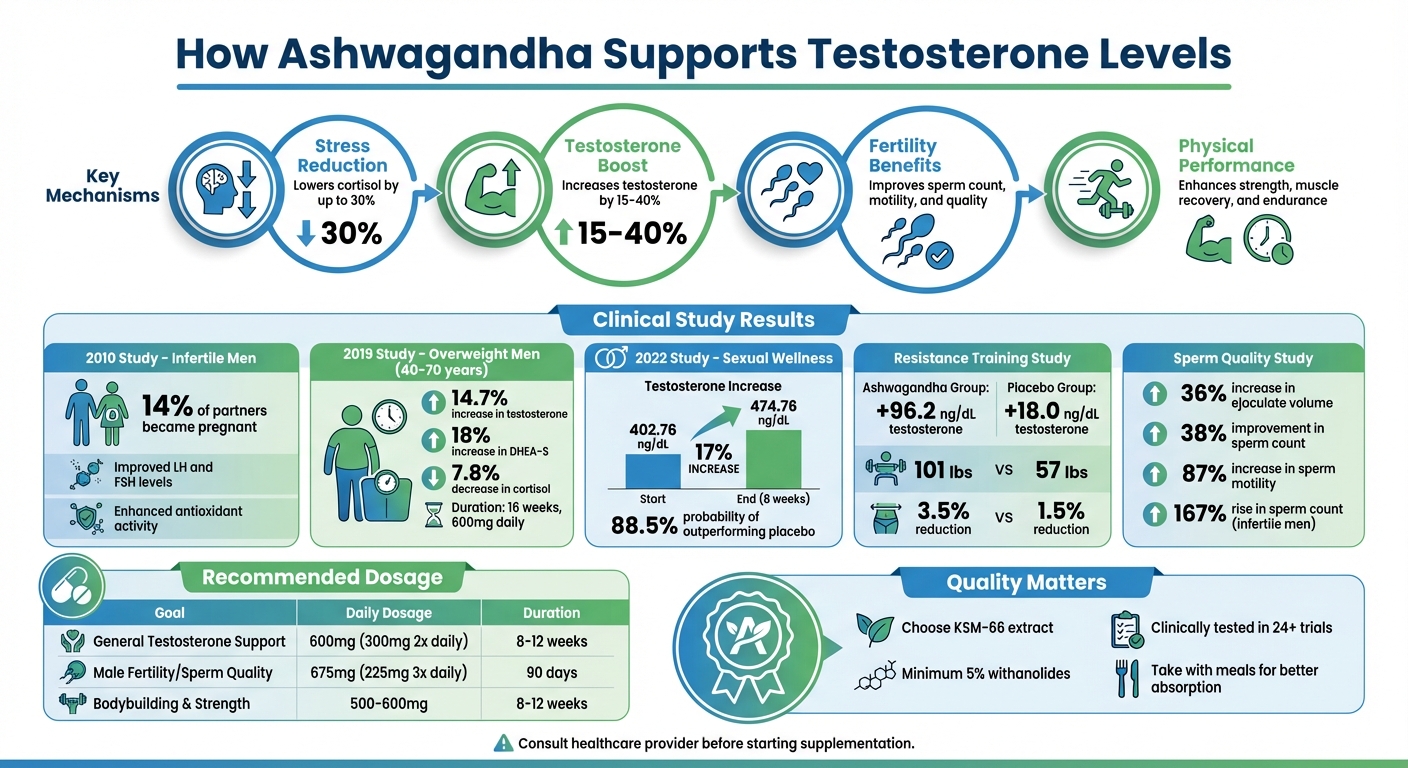
- Stress Reduction: Lowers cortisol by up to 30%, creating better conditions for testosterone production.
- Testosterone Boost: Studies report increases of 15-40% in testosterone levels with consistent use.
- Fertility Benefits: Improves sperm count, motility, and quality.
- Physical Performance: Enhances strength, muscle recovery, and endurance.
- Dosage: 600 mg daily (split into two doses) is commonly recommended for optimal results over 8–12 weeks.
Ashwagandha works best when paired with quality extracts like KSM-66 and a healthy lifestyle. Always consult a healthcare provider before starting supplementation.
Ashwagandha Effects on Testosterone: Clinical Study Results and Benefits
How Ashwagandha Boosts Testosterone Levels
Ashwagandha doesn’t directly raise testosterone levels. Instead, it helps the body create the right conditions for natural production by reducing stress. Let’s dive into how lowering cortisol can clear the path for better testosterone levels.
Reducing Cortisol Levels
Cortisol, often called the "stress hormone", and testosterone tend to work against each other. When stress becomes chronic, cortisol levels soar, signaling the body to focus on survival. This shift suppresses testosterone production since both hormones share a common precursor. If cortisol dominates, fewer resources are left for testosterone synthesis.
"The problem is not cortisol itself... but its sustained elevation over time. When the body constantly perceives stress, it prioritizes survival mechanisms and relegates functions considered 'non-essential,' including testosterone production." – NDL Pro-Health
In one 60-day study, participants who took a concentrated ashwagandha root extract saw cortisol levels drop by nearly 30%, compared to those on a placebo. Another study focusing on men aged 40 to 70 found testosterone levels increased by an average of 15%, with an 18% boost in DHEA, an important precursor hormone. Beyond stress relief, ashwagandha also improves sperm quality and fertility, further supporting testosterone levels.
Improving Sperm Quality and Fertility
Testosterone plays a key role in spermatogenesis, the process that produces sperm. Ashwagandha helps by stimulating the HPG (hypothalamic-pituitary-gonadal) axis, which increases luteinizing hormone (LH). This, in turn, promotes testosterone production.
In a February 2026 study published in Frontiers in Reproductive Health, researchers Aman Khanna and Mallika Khanna gave 300 mg of KSM-66® Ashwagandha root extract twice a day to 76 healthy men aged 30–50 for eight weeks. The results were impressive: ejaculate volume increased by 36%, total sperm count improved by 38%, and sperm motility shot up by 87% compared to the placebo group. Another trial involving infertile men noted a 167% rise in sperm count and an 18% increase in testosterone after three months of supplementation. Ashwagandha's antioxidant properties also shield testicular cells from oxidative damage, promoting healthier sperm development and protecting reproductive tissues.
Enhancing Physical Performance
Ashwagandha doesn’t just support hormones - it also boosts physical performance, which reinforces the benefits of healthy testosterone levels. Regular exercise naturally raises testosterone, and ashwagandha complements this by reducing muscle damage from workouts and speeding up recovery.
In one study, resistance-trained men who took 600 mg of ashwagandha daily experienced a testosterone increase of 96.2 ng/dL, compared to just 18.0 ng/dL in the placebo group. The ashwagandha group also showed bigger gains in bench press strength (lifting about 101 lbs more versus 57 lbs for the placebo group) and achieved a 3.5% reduction in body fat, compared to only 1.5% with placebo.
sbb-itb-7567710
Scientific Studies on Ashwagandha and Testosterone
Research consistently highlights the positive effects of standardized ashwagandha extracts on hormone levels in men. These findings emphasize its role in promoting hormonal balance and supporting male reproductive health and performance.
2010 Study on Infertile Men
A 2010 study published in Fertility and Sterility explored ashwagandha's impact on 150 men - 75 fertile and 75 undergoing infertility evaluations. The results showed that ashwagandha improved testosterone levels as well as LH and FSH, both crucial for sperm production. Additionally, its antioxidant properties increased the activity of superoxide dismutase (SOD), catalase, and glutathione in seminal plasma, offering protection against oxidative damage. Impressively, 14% of the partners of men in the ashwagandha group became pregnant by the end of the study. These results underline ashwagandha's ability to restore hormonal balance and enhance reproductive health.
2019 Study on Overweight Men Aged 40-70
In a 16-week crossover trial involving 57 overweight men aged 40–70, participants took 600 mg of Shoden beads (providing 21 mg of withanolide glycosides) daily for 8 weeks. The findings revealed a 14.7% increase in testosterone compared to the placebo group (p = 0.010) and an 18% rise in DHEA-S levels (p = 0.005). Cortisol levels also dropped by 7.8%.
"Ashwagandha intake was associated with an 18% greater increase in DHEA-S (p = .005) and 14.7% greater increase in testosterone (p = .010) compared to the placebo." – Adrian L. Lopresti, PhD, Lead Researcher, Murdoch University
These results further demonstrate ashwagandha's potential to enhance testosterone production and improve hormonal health.
2022 Study on Male Sexual Wellness
Research conducted in 2022 focused on men with low sexual desire, examining both hormonal changes and sexual function. Over 8 weeks, serum testosterone levels increased by 17%, rising from 402.76 ng/dL to 474.76 ng/dL. The study also reported an 88.5% probability that ashwagandha outperformed the placebo in improving total sexual function scores. These outcomes highlight ashwagandha's measurable benefits for sexual health and testosterone levels.
Additional Benefits of Ashwagandha for Fitness Enthusiasts
Stress Reduction and Improved Recovery
Ashwagandha does more than just support testosterone - it plays a key role in managing stress by regulating cortisol levels, which directly aids in muscle recovery. The recovery perks are backed by research. For instance, a 2015 study observed 50 healthy, untrained men (ages 18–50) who took 300 mg of KSM-66 ashwagandha root extract twice daily for eight weeks while participating in a resistance training program. The results? The ashwagandha group showed significantly lower levels of creatine kinase (CK) at 24 and 48 hours post-exercise compared to the placebo group, signaling less muscle damage. They also saw greater strength gains in both bench press and leg extension exercises.
Ashwagandha also promotes better sleep by interacting with GABAA receptors in the central nervous system, which helps create a sense of calm and improves rest.
These combined benefits - stress reduction, better sleep, and quicker recovery - lay the groundwork for improved endurance and energy, making it an excellent addition to a fitness regimen.
Boosting Energy and Endurance
Ashwagandha’s recovery benefits extend into the realm of energy and endurance. It has been shown to increase VO2 max, which is the maximum oxygen your body can use during intense exercise. A 2020 review of five studies confirmed that daily doses ranging from 330 mg to 1,000 mg significantly improved VO2 max in both trained and untrained individuals.
The herb also enhances cellular energy by improving mitochondrial function and activating AMPK, which helps sustain power output during workouts and reduces fatigue between sets. Diego A. Bonilla from DBSS International Research Division notes:
"Ashwagandha is considered a potent adaptogen and anti-stress agent that could have some potential to improve physical performance"
For those looking to maximize endurance and athletic performance, a daily dose of 600 mg over at least eight weeks is recommended to fully tap into these benefits.
Conclusion
Ashwagandha, known for its ability to reduce cortisol levels and support hormonal balance, has shown promise in boosting testosterone levels. Studies indicate that daily doses of 300–600 mg can lead to testosterone increases ranging from 15% to 40%. Beyond hormonal benefits, this herb also contributes to fitness improvements like greater muscle mass, enhanced strength, better VO2 max, and faster recovery.
The research speaks volumes: men who combined ashwagandha with resistance training experienced an average testosterone increase of 96.2 ng/dL, compared to just 18.0 ng/dL in placebo groups. Similarly, overweight men saw a 15% rise in testosterone after 16 weeks of supplementation.
For those aiming to improve hormonal health and physical performance, ashwagandha stands out as a highly effective option. Clinical studies suggest that consistent use for eight to 16 weeks is essential to achieve optimal results. Look for high-quality extracts such as KSM-66, which contain at least 5% withanolides, and consult a healthcare provider before starting, especially if managing conditions like thyroid issues, diabetes, or high blood pressure.
When combined with proper training, adequate sleep, and balanced nutrition, ashwagandha can be a powerful addition to your fitness and wellness routine. NutriFitt offers a range of thoughtfully selected products to support hormonal balance and overall health.
FAQs
Will ashwagandha help if my testosterone is already normal?
Ashwagandha might help maintain balanced testosterone levels, even if they're already within a normal range. Its primary benefit comes from its ability to lower stress and cortisol levels, which play a key role in hormone regulation. Beyond that, it could also enhance related aspects like energy levels and overall vitality.
How long does it take to notice changes in energy, libido, or workouts?
You might begin to feel shifts in your energy levels, libido, or even workout performance within 2 to 4 weeks of consistent ashwagandha use. For more noticeable changes, it generally takes about 6 to 12 weeks. Staying consistent is crucial to fully experiencing its effects.
Who should avoid ashwagandha or check with a doctor first?
People who are pregnant, breastfeeding, managing autoimmune conditions, or taking medications should talk to their doctor before using ashwagandha. This helps ensure it’s safe and minimizes the risk of possible interactions or side effects.
Latest Posts
How Ashwagandha Supports Testosterone Levels

10 Best Natural Pre-Workout Ingredients

Best Electrolyte Supplements for Fitness Goals

Best Nootropics for Productivity in 2026

Top 5 Sleep Hygiene Practices for Athletes

5 Best Pre-Workouts for Pump

The 30-Minute Body That Beats the 2-Hour One
Short, high-intensity 30-minute workouts can deliver equal or better cardio, strength, and fat-loss results than long sessions.

Checklist for Choosing Clean Label Certified Supplements
Checklist to verify certifications, ingredient transparency, batch COAs, GMP compliance, and bioavailable forms in clean-label supplements.